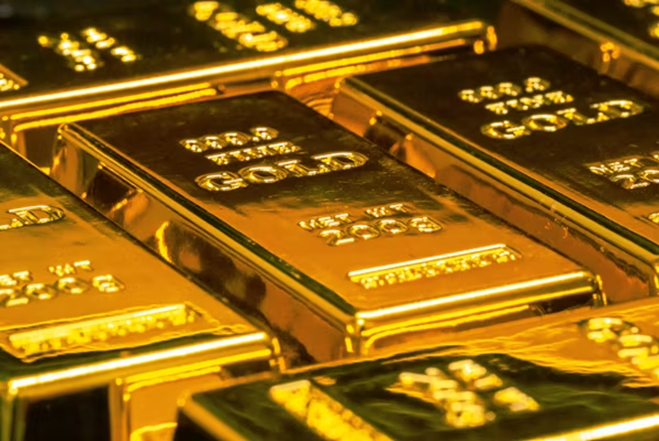
Gold prices in India have shown the unusual trend of trading at a discount for the first time in nearly a month. This shift has been driven by a combination of factors, including price volatility, weakening consumer demand, expectations of cheaper imports, and contrasting demand trends in other major markets, particularly China. While domestic markets are reacting to short-term pressures, the long-term outlook remains positive amid persistent global uncertainty.
Price Volatility Has Dampened Consumer Demand
A key reason for gold trading at a discount in India is subdued demand for the precious metal.
Discounts of up to $12 an ounce have been observed over prevailing domestic prices—a sharp reversal from premiums that had surged to nearly $70 an ounce just a week earlier. Local gold prices have also remained volatile, witnessing sharp corrections before stabilising at elevated levels.
This heightened volatility appears to have dampened consumer sentiment, particularly in the jewellery segment, which drives the bulk of India’s gold demand. Even reductions in making charges have not been sufficient to revive buying interest, underscoring the sensitivity of consumers to price fluctuations.
Import Expectations Are Influencing Market Behaviour
Another factor contributing to the discount is the anticipation of lower-cost imports. Market participants expect the government to permit a fresh allocation of gold imports from the United Arab Emirates under the India–UAE Comprehensive Economic Partnership Agreement (CEPA), which allows for reduced import duties on gold and silver.
In anticipation of cheaper inflows, many jewellers and bullion dealers are holding back on fresh purchases from banks. The expectation is that if imports arrive at lower costs, domestic prices may soften further making it prudent to delay procurement.
Strong Seasonal Buying in China Offers a Contrast
While demand in India has weakened, trends in China present a contrasting picture. Gold demand there remains relatively strong, supported by seasonal buying ahead of traditional festivals, a period typically associated with heightened jewellery consumption.
Additionally, the continued accumulation of gold reserves by the People’s Bank of China is providing structural support to demand. This sustained central bank buying is helping offset the impact of elevated prices.
Mixed Trends Across Other Asian Markets
Gold pricing across Asia reflects diverse local demand dynamics.
In Hong Kong, gold has traded near parity or at small premiums.
In Japan, prices have ranged from modest discounts to slight premiums.
In Singapore, bullion has moved within a narrow band between discounts and premiums.
These variations highlight how regional demand conditions rather than global price movements alone shape local pricing trends.
Long-Term Outlook Remains Positive
Despite the current softness in India, analysts remain optimistic about gold’s long-term trajectory.
According to Prashant Mishra, founder and CEO of Agnam Advisors, short-term corrections are typical following sharp price rallies, especially in a volatile global environment. Similarly, Sandip Raichura of PL Capital expects gold prices to strengthen over the coming years, supported by inflationary pressures, geopolitical risks, and sustained central bank demand.
Aksha Kamboj, Vice President of the India Bullion & Jewellers Association, attributes the recent dip largely to profit-booking rather than any structural shift in investor sentiment.
Conclusion
The current discount in gold prices in India appears to be the result of a temporary confluence of factors. Weak consumer demand amid price volatility, expectations of cheaper imports from the UAE, and cautious buying by jewellers have all contributed to the trend.
At the same time, strong seasonal demand in China and continued central bank purchases are supporting the global gold market.
As March transitions into April 2026, a period that typically precedes renewed buying interest linked to the wedding season and festive cycles market dynamics are likely to evolve. If price stability returns and import clarity improves, the present discount may well prove to be a short-lived phase in gold’s broader upward trajectory.