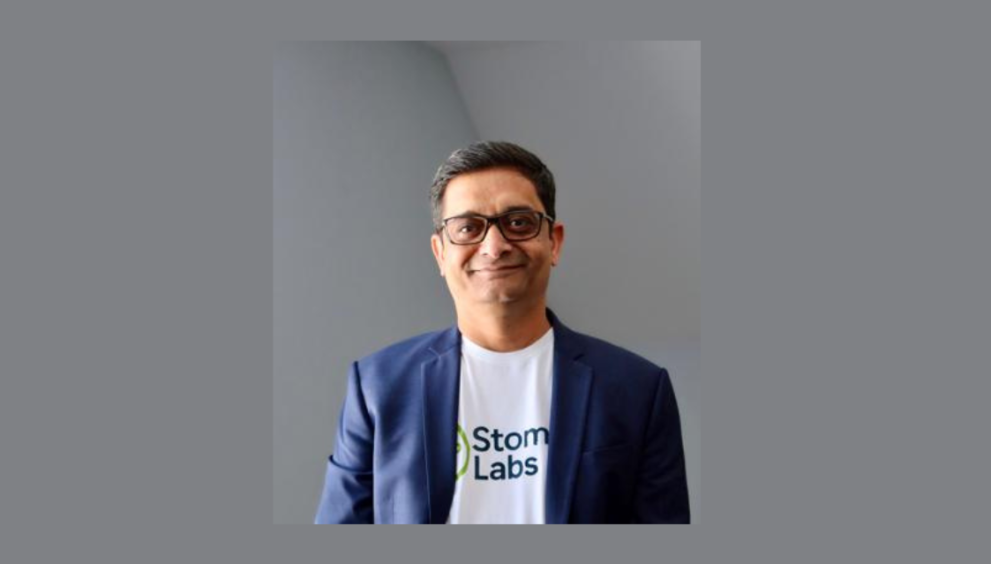
Mahurkar highlights that India is uniquely positioned in this phase of the AI transition, as it is not constrained by legacy investments that failed to scale—an issue many mature markets continue to grapple with, as he noted in an interview with Aditya Rangroo.
What makes Findability Sciences stand out in the AI space?
Most companies are still building AI models. We are building AI-driven businesses.
The industry has spent the last decade perfecting algorithms, but very little time industrializing their use. That is the gap we focus on.
At Findability Sciences, we have built what we call AI Factories: systems that take enterprises from fragmented data to continuous, decision-grade intelligence.
Our differentiation is simple but deliberate: We don’t measure success in model accuracy; we measure it in profitability, efficiency, and growth.
In a market crowded with tools and experimentation, we have chosen a harder path: making AI work where it matters most inside real operations, under real constraints, with real financial accountability.
2. How is the brand driving real business impact using AI?
There is a fundamental misconception in the market many believe AI creates value when it generates insight. It doesn’t.
Value is created only when AI changes a decision, and that decision changes an outcome. We embed AI directly into decision loops whether it is optimizing industrial processes in real time, improving forecasting accuracy at the enterprise level, or enabling leadership teams to interact with their business conversationally.
This is not analytics. This is operational intelligence. And when done right, the results are not incremental they are structural. Higher yields, lower energy consumption, better capital efficiency. That is where AI stops being a technology initiative and becomes a business advantage.
3. How do you see the AI industry evolving in India and globally?
We are moving from the “AI hype cycle” to the “AI accountability era.” Globally, enterprises are under pressure to justify AI investments with real returns. The conversation is no longer about capability it’s about impact at scale.
India has a unique opportunity in this transition. Unlike many mature markets, India is not burdened by legacy AI investments that failed to scale. It can move directly toward applied, outcome-driven AI.
In sectors like agriculture, manufacturing, and public infrastructure, India can lead the world, not by building the most advanced models, but by deploying AI at population scale with economic impact.
The next leaders in AI will not be those who innovate the most, but those who execute the best.
4. What are the biggest barriers to AI adoption today?
The biggest barrier is not technology. It is misalignment. Organizations treat AI as a side initiative rather than core infrastructure. Data sits fragmented across systems. Business teams are not accountable for outcomes. Technology teams are not measured on impact.
The result is predictable: endless pilots, limited scale, and unclear ROI. There is also a deeper issue AI challenges how decisions are made. It introduces transparency, accountability, and sometimes uncomfortable truths. Not every organization is ready for that.
The companies that succeed are those that treat AI as a transformation of decision-making, not just an upgrade to technology.
5. Which AI trends will dominate the next few years?
The next phase of AI will be defined by execution, not experimentation.
Three shifts will dominate:
- Agentic AI – systems that can take decisions and initiate actions, not just generate outputs
- AI Factories – standardized, scalable architectures replacing fragmented AI efforts
- Vertical AI – deeply industry-specific solutions outperforming generic platforms
But the most important shift is this: AI will move from being advisory to operational. It will not sit on dashboards—it will sit inside workflows, control systems, and leadership decisions. And when that happens, the competitive gap between adopters and non-adopters will widen dramatically.
6. How is the company leveraging generative AI advancements?
Generative AI has captured imagination, but it has also created confusion. On its own, generative AI is powerful but incomplete. It excels at interaction, not decision-making.
We use generative AI as an interface layer through Business Process Co-Pilots that allow users to query their business in real time, generate insights, and explore scenarios conversationally.
But those interactions are backed by something deeper: predictive models, domain intelligence, and unified data systems. Therefore, without this foundation, generative AI may become articulate but inaccurate. Our approach ensures it is not just conversational but correct, contextual, and consequential.
7. Which industry verticals are leading in AI adoption?
AI adoption is accelerating fastest in industries where economics are unforgiving and margins matter.
Financial services lead because risk is quantifiable. Manufacturing is advancing rapidly because efficiency directly impacts profitability. Retail continues to innovate because customer behavior is dynamic and measurable.
What is more interesting, however, is the emergence of sectors like agriculture and energy industries that were historically underserved by technology but are now becoming central to global sustainability and economic stability.
AI is not just optimizing these sectors it is redefining them.
8. How do AI-use cases differ across sectors like BFSI, retail, and manufacturing?
Each sector reflects a different dimension of value creation.
- In BFSI, AI is about decision precision risk, fraud, and capital allocation
- In retail, it is about demand intelligence anticipating behavior and optimizing experience
- In manufacturing, it is about operational control improving processes, reducing waste, and maximizing output
But beneath these differences lies a common principle: AI is only valuable when it connects data to action, and action to measurable outcomes. That is the discipline the industry is now moving toward and that’s where the real winners will emerge.