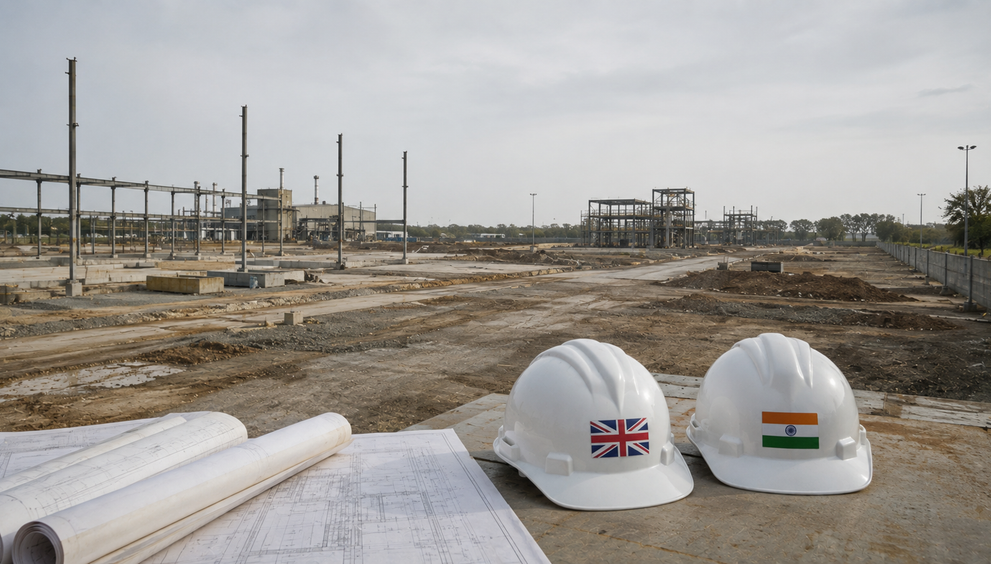
India’s growing industrial capabilities were becoming an increasingly important part of Silex World Ltd’s international strategy as the UK based University of Leeds spinout expanded its focus on critical materials processing, rare earth recovery and sustainable manufacturing
Silex World had been developing its India strategy around a broader ambition: to combine technology developed in the United Kingdom with India’s engineering capabilities, manufacturing infrastructure, industrial feedstocks and growing demand for strategic materials.
Rather than treating India simply as a large end market, the company was positioning the country as a potential industrial platform for developing, validating and eventually deploying critical materials technologies across international markets.
The approach reflected a wider shift in global supply chains. Governments and manufacturers had increasingly sought to reduce dependence on geographically concentrated sources of critical materials and processing capacity. India, with its expanding automotive, renewable energy, electronics, defence, infrastructure and advanced manufacturing sectors, was well placed to participate in that transition.
From Technology to Industrial Capability
Silex World had been working with Indian industrial and technical partners to establish the foundations for regional processing capabilities. The proposed platform was intended to support both domestic requirements and future international deployment.
Its technology portfolio included rare earth recovery, multi feedstock processing, continuous low energy conversion, modular processing infrastructure and digital material traceability.
The India programme was expected to support the processing of rare earth bearing and other strategic feedstocks, recovery of valuable materials from industrial residues and manufacturing waste, development of modular processing systems and continuous low energy processing under industrial conditions.
The company also saw collaboration with Indian engineering and manufacturing businesses as an important component of the strategy.
This model was particularly relevant as global manufacturers looked beyond traditional sourcing structures. Critical materials had become central to industries ranging from electric vehicles and renewable energy to electronics, defence and advanced manufacturing.
As the conversation around resilient supply chains evolved, the ability to process materials closer to both feedstock and manufacturing demand was becoming increasingly significant. For a broader perspective on the changing relationship between technology, manufacturing and global supply chains, read more from WEM India.
India as More Than a Market
Michael Hodges, Founder of Silex World, highlighted the strategic importance of India, describing the country as more than simply a market for the company.
He said India offered the engineering capability, manufacturing base, industrial resources and ambition required to become an important part of the next generation of global critical materials supply chains.
The company’s objective was to combine UK developed technology with Indian industrial capabilities and create a platform that could eventually support customers and supply chains across several international markets.
That vision also reflected Silex World’s belief that the future critical materials economy could increasingly depend on a network of regional processing centres rather than a small number of highly concentrated refining locations.
For India, such a development could create opportunities not only in manufacturing but also in materials recovery, processing technology, engineering services and higher value industrial production.
Building a More Circular Materials Economy
Another important element of Silex World’s approach was the potential to recover value from industrial residues, recycled products and manufacturing scrap.
The company believed that processing materials closer to their source could reduce dependence on long international processing routes while allowing valuable resources to be returned to productive use.
Its focus on circularity also aligned with the growing global emphasis on resource efficiency and supply chain resilience. As demand for critical materials increased, recovering usable materials from waste streams could become an increasingly important complement to traditional extraction and refining.
The India programme was also expected to provide Silex World with operational and engineering experience that could support future projects in the United Kingdom, Europe, North America and other allied markets.
A Platform for Global Growth
Silex World had continued discussions with industrial, technical, government and investment stakeholders as it evaluated additional feedstocks and applications for its technology platform.
The company’s India strategy therefore represented more than an expansion into another market. It formed part of a larger effort to develop commercially scalable and geographically diversified critical materials supply chains.
For India, the opportunity was equally significant. The country’s expanding industrial base and engineering talent could make it an important location for the next phase of critical materials processing.
By bringing together British technology and Indian industrial capability, Silex World was seeking to demonstrate how regional processing infrastructure could contribute to a more resilient, traceable and circular global materials economy.
About Silex World Ltd
Silex World Ltd was a University of Leeds spinout developing technologies for critical materials recovery, rare earth recycling, advanced materials processing, industrial minerals upgrading and sustainable manufacturing systems. The company focused on scalable solutions designed to support resilient and circular supply chains for strategic materials.
Official website: www.silexworld.com
Silex World’s India strategy is intended to support a wider regional-processing model, with the commercial and operational milestones that would demonstrate this platform is becoming scalable beyond an initial market-entry narrative.