A new report by Skyscanner revealed that 77% of Indians remained confident about travelling during Summer 2026, with travellers increasingly prioritising flexible planning, offbeat destinations, and value driven decisions amid changing airfare trends and global uncertainty. India’s travel sector appeared to be entering another strong summer season, but with a noticeable shift in traveller behaviour. While demand for holidays remained resilient, consumers were approaching travel planning with greater caution, flexibility, and financial awareness than in previous years.
According to the latest Smarter Summer Report released by Skyscanner, nearly 77% of Indian travellers expressed confidence about travelling within the next three months despite ongoing economic and operational uncertainties affecting the global travel landscape. The findings suggested that travel demand itself had not weakened. Instead, Indian consumers were becoming increasingly strategic in how they planned, booked, and budgeted their holidays.
The report noted that nearly nine out of ten Indians were either actively planning or had already booked their Summer 2026 vacations. At the same time, approximately 38% of travellers were still exploring options and monitoring conditions before finalising bookings, reflecting a more adaptive and research driven planning approach. Industry analysts observed that Indian travellers were no longer making decisions based purely on destination popularity. Instead, considerations such as airfare fluctuations, total trip costs, crowd levels, flexibility, and local experiences were beginning to shape travel choices more strongly.
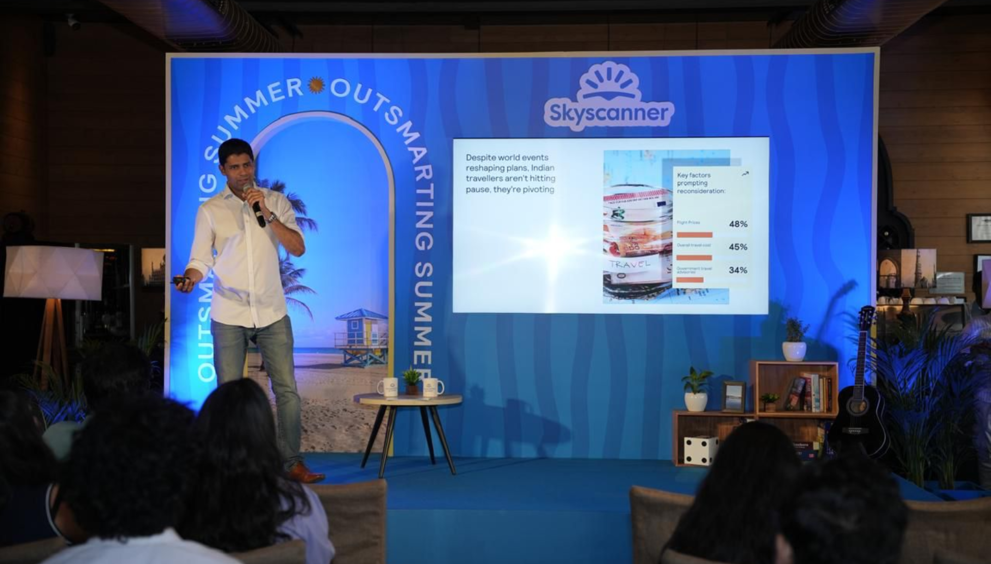
According to the report, nearly 48% of travellers considered fluctuating airfares a major factor while planning trips, while 45% evaluated overall travel costs more carefully than before. Travel advisories influenced decisions for 34% of respondents, while operational disruptions such as airport closures affected nearly one third of travel plans.
At the same time, travellers appeared increasingly aware of seasonal pricing trends. Around 58% believed July offered more affordable flight options compared to August, suggesting growing consumer familiarity with fare cycles and value based booking behaviour. Neel Ghose, Travel and Destinations Expert at Skyscanner India, stated that Summer 2026 was shaping up to be one of the country’s most intent driven travel seasons, even though the way consumers translated that intent into bookings was evolving significantly.
According to him, travellers were not abandoning vacations but adapting within constraints by remaining flexible about destinations, travel windows, and budgets. He noted a visible behavioural shift from following mainstream tourism patterns toward exploring alternative destinations capable of offering stronger value and more meaningful experiences. One of the report’s most notable findings was the rising preference for lesser known destinations. Approximately 81% of Indian travellers indicated openness toward exploring hidden gems and offbeat locations rather than crowded tourist hotspots.
Meanwhile, 60% said they were actively searching for quieter and less congested travel experiences, reflecting a broader shift toward slower, more immersive tourism. The report also highlighted a growing sense of social and community consciousness among Indian travellers. Nearly nine out of ten respondents said it was important that their holiday spending benefited local communities and small businesses. This emerging preference for community led travel experiences was already becoming visible within India’s hospitality sector.
Zostel reported significant growth in demand for offbeat destinations across its network. Aviral Gupta, CEO of Zostel and Zo World, stated that bookings for lesser known destinations across the platform had grown 88% year on year. He also noted that nearly 60% of guests travelling to these locations were first time travellers, many originating from Tier 2 and Tier 3 cities, underscoring the widening geographic base of India’s travel economy.
The report additionally revealed how flexibility was becoming central to modern travel planning. While many travellers still operated within fixed schedules due to work and school calendars, nearly 30% indicated they would rather switch destinations than cancel trips altogether. Group travel planning, however, continued to remain a major challenge. Indians reportedly spent more than 15 hours on average coordinating group vacations, with many respondents describing the process as more stressful than major life events such as moving homes or organising weddings.
To help simplify decision making, Skyscanner highlighted tools such as Price Alerts and Whole Month search features, which allow travellers to track fare movements and identify better value travel windows. The report ultimately pointed toward a broader evolution in Indian travel behaviour. Rather than impulsive holiday spending, travellers increasingly appeared focused on balancing aspiration with practicality, choosing experiences that combined affordability, flexibility, authenticity, and emotional value in an increasingly complex global travel environment.