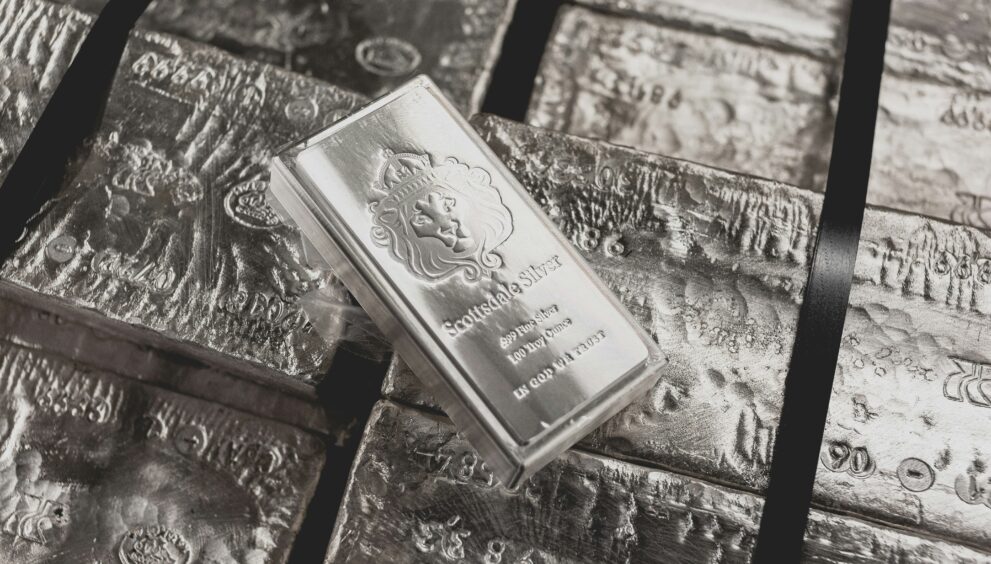
India has introduced new restrictions on silver imports, classifying almost all forms of the precious metal as “restricted” with immediate effect. The move, announced through a government directive on Saturday, is another step towards the government’s efforts to curb non-essential imports, ease pressure on the rupee, and reduce stress on foreign exchange reserves.
As the world’s largest importer of silver, India’s decision is likely to have wide implications not only domestically but also for global silver markets. The new restrictions come shortly after India raised import duties on gold and silver from 6% to 15% as part of broader measures aimed at reducing imports.
Implications of the New Regulations
Under the revised import regulations, India has moved silver bars with 99.9% purity, along with all other semi-finished silver products, into the “restricted imports” category.
This means importers will now require special government approval to bring these products into the country. Together, these categories accounted for more than 90% of India’s silver imports during FY 2025–26, making the move particularly significant for the bullion industry.
According to industry experts, the restrictions are intended to discourage large-scale imports of silver products used mainly for investment purposes while still permitting targeted imports for industrial use.
Market observers believe the move could lead to temporary supply shortages in the domestic market.
Why the Government Is Intervening Now
The decision comes amid rising concerns over pressures on India’s external sector.
The Indian economy has been facing increasing strain on foreign exchange reserves due to elevated crude oil prices, geopolitical tensions in West Asia, and rising import costs across several commodities. At the same time, silver imports into India have risen sharply.
India imported silver worth $12 billion in FY 2025–26, compared with $4.8 billion in the previous financial year.
According to India’s Ministry of Commerce, silver imports surged 157% in April alone, reaching $411 million.
The sharp increase has added to the country’s import bill at a time when policymakers are attempting to stabilise the rupee and manage the balance of payments deficit.
Impact on Domestic Silver Markets
In the short term, the domestic market is expected to witness tighter supply conditions.
Market experts believe silver could begin trading at a premium compared to international prices. According to Chirag Thakkar, CEO of Amrapali Group Gujarat, silver had earlier been trading at a discount due to higher import duties.
However, with availability likely to decline under the new policy framework, premiums are expected to rise in the coming weeks.
Several industries that depend heavily on silver could also be affected by the restrictions. Apart from jewellery, coins, and silverware, silver is widely used in:
- Solar power generation
- Electronics
- Electrical appliances
- Medical devices
Investment Demand Continues to Drive Imports
One of the key features of the recent surge in silver imports has been strong investment demand rather than traditional jewellery demand.
Investors are increasingly turning to silver as a hedge against inflation and volatility in equity markets. Recent inflows into silver exchange-traded funds have reflected growing investor interest in commodity-linked assets.
The government appears to be aiming to discourage investment-driven imports while ensuring adequate availability for industrial applications.
According to a bullion dealer in Mumbai, the government may continue permitting limited silver imports for industrial use while tightening restrictions on bars and investment-oriented products.
Implications for Global Silver Markets
A slowdown in Indian silver imports could also influence global bullion markets.
India sources more than 80% of its silver requirements from countries including the United Arab Emirates, the United Kingdom, and China.
Reduced demand from India may put downward pressure on international silver prices, especially if global industrial demand remains mixed. However, supply shortages within the Indian market could partly offset the broader impact on prices.
Balancing Stability and Market Risks
While the measures may help improve India’s external balance, they also carry certain risks.
Higher domestic premiums could encourage black-market activity, similar to trends previously seen in the gold market following duty increases.
Historically, smuggling activity has tended to rise whenever restrictions on precious metal imports become more stringent.
India’s decision to tighten silver import regulations reflects the government’s broader strategy to reduce import dependence and protect foreign exchange reserves.
Although the move may strengthen India’s macroeconomic position over time, it is also likely to create short-term disruptions in the bullion market. Going forward, policymakers will need to balance external sector stability with the needs of industrial users and legitimate market demand.