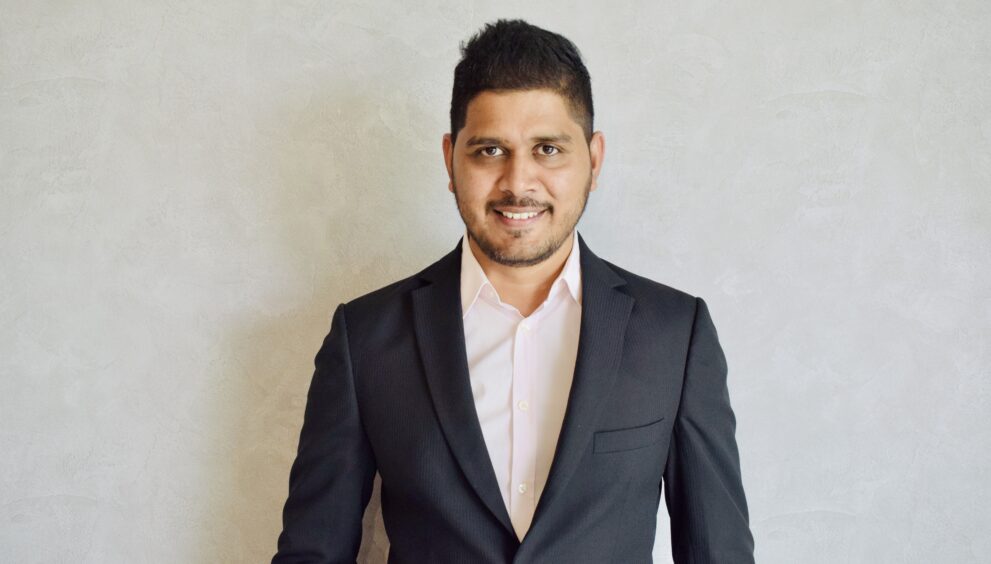
HNIs should avoid building portfolios only for bull-market scenarios. Instead, portfolios should be capable of performing across bull, flat, and volatile market environments, says Anand K Rathi, Co-founder, MIRA Money
India is witnessing a steady rise in the HNI and affluent investor segment. What investment principles and portfolio strategies would you currently recommend for HNIs in 2026?
One of the biggest shifts I would recommend for HNIs in 2026 is moving away from “return-maximisation-only” thinking toward outcome-oriented portfolio construction. For many affluent investors today, wealth has already been created. The larger challenge now is preserving, compounding, and structuring that wealth efficiently across market cycles.
HNIs should avoid building portfolios only for bull-market scenarios. Instead, portfolios should be capable of performing across bull, flat, and volatile market environments. At this point, asset allocation takes on much greater importance than product selection.
The ideal balanced portfolio today would comprise large cap stocks, select mid cap exposure, hybrid strategies, debt instruments for liquidity management, and measured allocations to alternatives and global diversity. Portfolio construction should also be guided by cash flow requirements, company exposure, family responsibilities and succession planning considerations.
Another key aspect is the discipline of liquidity. In positive market phases many HNIs tend to overweight illiquid assets. “Having adequate liquidity buffers is important because it can help avoid distress selling during uncertain times.
Most significantly, HNIs should focus on stability and longevity of wealth, and not the best performing asset every year. Compounding sustainably over decades is the most powerful technique to create wealth.
Amid global uncertainty, volatile markets, and changing interest rate cycles, how should HNIs approach portfolio allocation and risk diversification today?
“We are in a market environment that calls for a much more balanced and dynamic portfolio allocation than the liquidity-driven rallies we have seen over the past few years.” Today, inflation, interest rates, geopolitical threats, currency volatility and global growth concerns can all influence returns at the same time.
Against this backdrop, the largest threat to wealth generation over the long run is concentration risk. In strong market rallies many portfolios accidentally become overexposed to a single asset class, geography or sector. These imbalances then show themselves in the repair phase.
HNIs should consequently diversify across equities and debt, and also between domestic and global markets, growth and defensive sectors and liquid versus long duration assets.
The portfolios should be built with the capacity to withstand shocks without jeopardizing long-term financial objectives, as far as allocation is concerned. This could be staggered debt allocation for liquidity, selective hybrid exposure for smoother portfolio experiences, and tactical exposure to global assets or commodities for macro hedging.
The goal is not to remove volatility from the equation, as volatility is a necessary aspect of wealth creation, but to ensure the portfolio is resilient enough to allow investors to be disciplined in times of uncertainty.
Alternative investments and global diversification are becoming increasingly popular among wealthy investors. How should HNIs evaluate opportunities beyond traditional equity and fixed-income products?
HNIs should see alternative investments and global diversification as portfolio enhancers, not shortcuts to returns. In recent years, typical portfolios alone may not be sufficient for diversity, causing many wealthy investors to look at private markets, REITs, InvITs, structured products and international shares.
However, one of the biggest mistakes investors make is entering alternatives purely because of return expectations or exclusivity. Every alternative asset carries its own liquidity risks, valuation complexities, taxation implications, and investment horizons.
The first step should always be defining the role that the allocation is expected to play within the portfolio. Is it meant for diversification, inflation protection, income generation, global exposure, or long-term growth? The suitability of the product depends entirely on that answer.
Global diversification, in particular, is becoming increasingly relevant because many Indian HNIs already have concentrated exposure toward domestic businesses, Indian equities, or real estate. International allocation provides currency diversification, access to global innovation cycles and exposure to sectors that are not well represented in India.
That said, allocations to alternatives and global assets should continue to be measured and targeted. The core portfolio should remain focused on stable, diversified long-term assets.
Wealth preservation has become as important as wealth creation in recent years. What strategies would you recommend for HNIs to balance long-term growth with downside protection?
One of the biggest realities affluent investors are recognising today is that preserving wealth often requires more discipline than creating wealth. During strong bull-market phases, many portfolios become overly aggressive because rising markets temporarily hide underlying risks. The challenge emerges when market cycles reverse.
The first strategy for balancing growth with protection is to build portfolios for all market conditions rather than only for bull markets. Investors must construct a framework in which one portion of the portfolio continues to compound for long-term gain while another portion provides liquidity, stability and downside cushioning during volatile periods.
Second, HNIs should not over-leverage and over-concentrate in illiquid assets. “Wealth destruction is often not due to bad returns but because investors lose flexibility in difficult times.
Third, regular rebalancing of the portfolio is quite crucial. As some assets outperform, allocations can wander away from the appropriate risk levels. Rebalancing allows investors to manage risk in a systematic way rather than an emotional one.
Finally, behaviour control is crucial in wealth preservation. The investors that stay disciplined in uncertain market cycles produce far better long-term results than those that are continually reacting to short-term market noise.
What are some of the most common financial planning mistakes or blind spots you continue to observe among affluent and high-net-worth investors?
One of the most common mistakes among HNIs is confusing high income with strong financial planning. Many affluent individuals successfully create wealth but often neglect structured portfolio management, risk planning, and long-term succession frameworks.
Another huge blind spot is too much concentration. Many investors are strongly invested in their business area, in real estate assets or in a few investment ideas. In good cycles this could look like a worthwhile proposition, but concentration risk can have a substantial effect on wealth stability in the long term.
Liquidity management is another often overlooked problem. Some investors are overweight in illiquid assets and have no plan for emergency liquidity, lifestyle spending, taxes, or corporate contingencies.
Behavioural hazards are also commonly under-assessed. Even with access to sophisticated financial products, portfolios can be hurt by emotional investing, chasing momentum, joining themes late or reacting strongly during market falls.
Finally, succession planning in India is still not given enough. Over the past decade, wealth accumulation has accelerated dramatically but structured intergenerational planning, estate structures, governance mechanisms and family financial education are still missing in many affluent homes.
As family offices and structured wealth planning gain traction in India, what should HNIs focus on while building long-term wealth and succession planning frameworks?
India is entering a phase where the preservation of wealth and its continuity across generations will be as vital as the production of entrepreneurial prosperity itself. But informal arrangements for financial management tend to prove insufficient when wealth grows.
As a result, HNIs should prioritize the development of strong governance institutions around wealth. This involves succession planning, estate structuring, tax efficiency frameworks, proper trust structures and clearly defined investment mandates related to the family’s objectives.
One of the largest global issues in wealth transition is the lack of communication and financial readiness of the next generation. The whole fabric of family governance should be embedded with financial literacy and appropriate resource allocation.
Family offices are likewise transitioning from transaction-oriented to strategic long-term advisory platforms.” Successful family wealth management in the future will involve a combination of investment skill, governance discipline, risk management and behavioural alignment across generations.
The aim should not only be to preserve assets, but to ensure continuity, flexibility and long-term financial security for future generations.
Technology and digital platforms are reshaping wealth management globally. How should HNIs evaluate digital-first advisory and investment solutions in India?
Technology is changing wealth management. Portfolio tracking, access to data, efficiency of execution and personalized advisory have all become much more scalable and transparent.
However, HNIs need to examine digital-first platforms not only from a convenience perspective, but also on the quality of advice frameworks and portfolio philosophy.
The actual advantage of technology is in increasing investment discipline and decision making. Technology can assist investors to mitigate behavioural mistakes, increase portfolio monitoring, lower execution inefficiencies and establish data driven investing frameworks.
That said, wealth management for HNIs still requires good human judgement especially in times of uncertainty, succession planning, market stress or complex financial decisions. The future will be a hybrid approach, with technology taking care of efficiency and analytics, and advisers focusing on behavioral counsel, asset allocation and strategic planning.
HNIs should therefore evaluate digital platforms on transparency, process orientation, portfolio discipline, risk frameworks and long-term alignment rather than on product access or return forecasts.
Looking ahead, what major shifts do you expect in the investment behaviour, portfolio construction, and financial priorities of India’s HNI and ultra-HNI segment over the next 5–10 years?
Over the next decade Indian HNIs are likely to become significantly more sophisticated in how they approach wealth management. The conversation will gradually shift from product-led investing toward structured portfolio architecture and goal-based wealth management.
We are also likely to witness much greater diversification across geographies, asset classes, and liquidity buckets. Global exposure, alternatives, private markets and income-generating assets are expected to become increasingly mainstream within affluent portfolios.
Secondly, behavioural maturity among investors will improve. The next generation of HNIs is far more data-oriented, digitally aware, and open to advisory-led investing compared to earlier generations that relied heavily on concentrated asset ownership.
Thirdly, wealth preservation, succession planning, tax efficiency, and family governance will become central to portfolio discussions. India is witnessing large-scale creation of first-generation wealth, and naturally the focus will shift toward protecting and transitioning that wealth effectively.
Finally, I believe the biggest long-term shift will be toward “all-market investing” rather than “bull-market investing.” Investors will increasingly recognise that long-term success depends not only on participating in rallies, but also on surviving difficult cycles with discipline, liquidity, and emotional stability intact.