


The India–New Zealand Free Trade Agreement is emerging as a pivotal development for the global fashion industry, opening a new era of tariff-free apparel trade, faster supply chains, sustainable sourcing, and deeper manufacturing collaboration between two strategically complementary economies
The global fashion industry is undergoing a significant recalibration as brands increasingly rethink sourcing strategies in response to geopolitical uncertainty, rising production costs, sustainability pressures, and shifting consumer expectations. Against this backdrop, the recently signed India–New Zealand Free Trade Agreement (FTA) is being viewed by industry observers as more than a routine trade arrangement. Many see it as a structural shift capable of reshaping apparel sourcing dynamics between South Asia and the Pacific region.
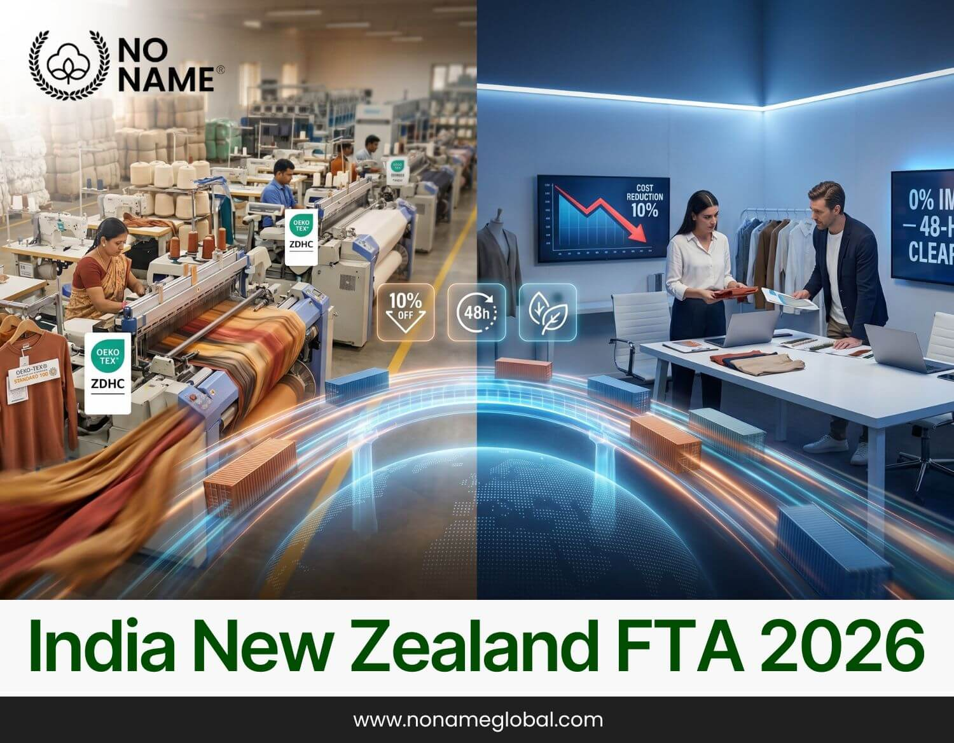
Signed on April 27, 2026, the agreement establishes a new framework for textile and garment trade between the two nations, eliminating tariffs on Indian apparel exports to New Zealand while simplifying customs processes, compliance requirements, and supply chain coordination.
For global fashion brands and retailers operating in New Zealand, the agreement offers immediate access to one of the world’s most extensive textile manufacturing ecosystems at significantly lower operational costs.
Previously, apparel imports from India faced duties ranging between five and ten percent, adding pricing pressure for importers and retailers. With those tariffs now effectively removed, Indian manufacturers gain a substantial competitive advantage in the New Zealand market.
Industry analysts note that this cost reduction arrives at a critical time for fashion businesses worldwide. Brands are increasingly searching for sourcing destinations capable of balancing affordability, speed, sustainability, and production scale simultaneously.
India’s textile industry is uniquely positioned in that regard.
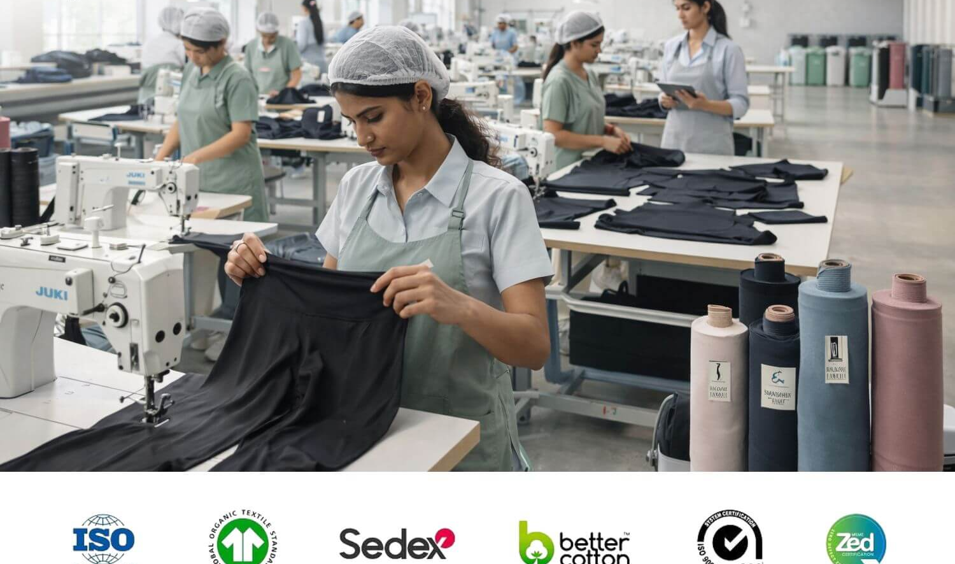
As one of the world’s largest textile and apparel producers, India offers a deeply integrated supply chain that spans fibre cultivation, spinning, weaving, dyeing, processing, and garment manufacturing. The sector contributes significantly to India’s economy and supports millions of jobs across manufacturing clusters known globally for specialised production expertise.
Regions such as Tiruppur, Surat, Ludhiana, and Ahmedabad have evolved into globally connected manufacturing hubs capable of handling everything from knitwear and synthetics to premium woven textiles and sustainable fabrics.
For New Zealand fashion brands, the agreement creates opportunities not only for lower production costs, but also for more agile sourcing structures.
A major component of the FTA includes streamlined customs mechanisms and faster cargo clearance systems designed to improve supply chain responsiveness. The introduction of a 48-hour clearance framework is expected to reduce logistical delays and enable shorter lead times — an increasingly important advantage in a fashion industry driven by rapid trend cycles and inventory efficiency.
Experts believe the agreement may also accelerate the shift away from over-concentrated sourcing dependencies that have dominated global apparel manufacturing for decades.
In recent years, fashion companies worldwide have sought to diversify supply chains to improve resilience following disruptions caused by the pandemic, shipping bottlenecks, geopolitical tensions, and fluctuating production costs in traditional sourcing markets.
India is increasingly benefiting from that transition.
Another important dimension of the agreement lies in sustainability.
Environmental accountability has become central to modern fashion sourcing decisions, particularly among younger consumers and premium brands. India, now one of the world’s leading producers of organic cotton and recycled textile materials, has significantly expanded its sustainable manufacturing capabilities over the past decade.
The tariff-free framework now makes eco-conscious sourcing more commercially viable for New Zealand brands seeking access to organic cotton, recycled fibres, and environmentally compliant production systems.
Industry observers note that this alignment between sustainability and cost efficiency could prove particularly influential as fashion brands face growing pressure to meet ESG targets without compromising profitability.
The agreement also opens new possibilities for a fully integrated wool-to-garment value chain.
New Zealand is globally recognised for its premium wool production, while India possesses large-scale garment manufacturing expertise. Under the new framework, raw wool sourced from New Zealand can be processed into finished apparel products in India before being re-exported, creating opportunities for higher-value product development and stronger origin-based storytelling.
Such collaborations are increasingly valuable in luxury and premium fashion segments where traceability, craftsmanship, and heritage narratives carry growing consumer appeal.
Beyond economics, the agreement reflects a broader evolution in how international trade partnerships are being structured around supply chain ecosystems rather than purely commodity exchange.
For emerging and mid-sized fashion labels, simplified compliance procedures under the FTA may lower barriers traditionally associated with international manufacturing partnerships. Standardised certification systems and reduced documentation complexity are expected to make India more accessible to brands without large-scale sourcing infrastructure.
According to industry projections, Indian garment exports to New Zealand could potentially witness significant growth over the next two years as brands gradually realign sourcing operations under the new framework.
Companies such as NoName are positioning themselves to support this transition through export-focused manufacturing capabilities, sustainable production systems, and integrated supply chain management solutions tailored for international fashion brands.
Industry experts believe the India–New Zealand FTA ultimately represents more than a bilateral trade agreement. It signals the emergence of a more connected and strategically diversified global fashion economy where agility, sustainability, and integrated manufacturing ecosystems are becoming increasingly central to competitive advantage.
As global apparel sourcing enters a new phase of transformation, India appears poised to strengthen its role not only as a manufacturing powerhouse, but as one of the defining supply chain partners shaping the future of international fashion production.


Building from Akola: How Pranjali Kharche Built a Fashion Brand from a Tier-3 City - World Economic Magazine India
23rd Sep 2026[…] young founders speak about building fashion businesses in India, the conversation usually turns towards Mumbai, Delhi or Bengaluru. Pranjali Kharche made a […]