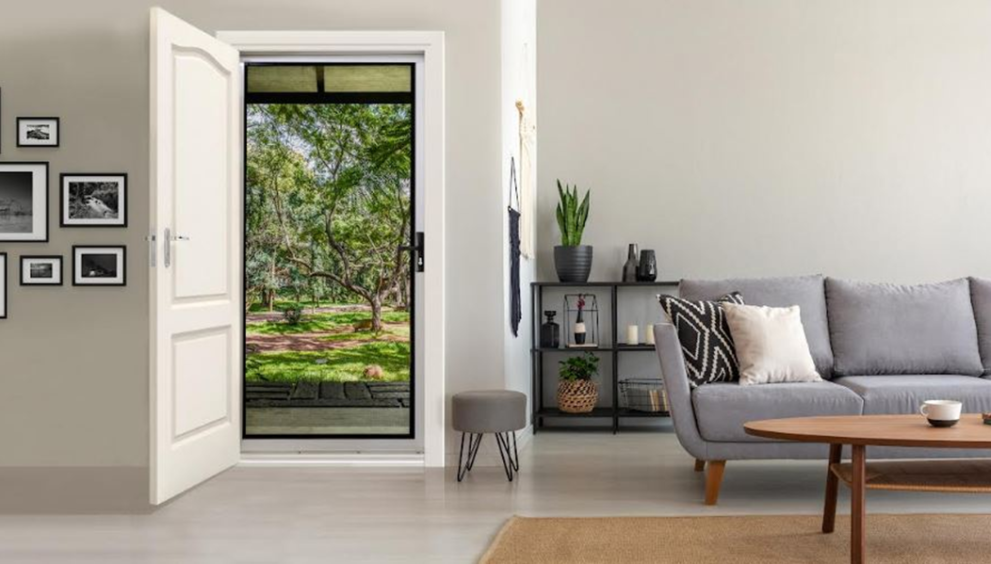
As India’s cities expand and homebuyer priorities evolve, architects and developers are moving beyond heavy grills and closed facades toward a new generation of secure, breathable homes that combine wellness, openness, sustainability, and advanced security engineering
India’s residential real estate market has been undergoing a profound transformation, one that extends beyond architecture and engineering into the psychology of modern urban living. Across rapidly expanding metropolitan centres such as Bengaluru, Hyderabad, Pune, and Mumbai, the meaning of a “secure home” has evolved dramatically. Security, once treated as an afterthought added toward the final stages of construction, has increasingly become an integral part of architectural planning itself.
This shift has created a new design language in Indian housing, where safety no longer competes with aesthetics, openness, or wellness. Instead, architects and developers are attempting to merge protection with what the industry now widely refers to as biophilic living — an approach that prioritises natural light, ventilation, greenery, and a stronger connection between indoor and outdoor spaces. Industry observers noted that this transition represented a significant departure from older urban housing models dominated by visible barriers such as bulky iron grills, enclosed balconies, and heavily fortified facades. The traditional “iron cage” aesthetic, long associated with residential security in Indian cities, has gradually started losing favour among both developers and homebuyers seeking more breathable and visually open environments.
The conversation surrounding this evolution has become increasingly prominent across major architectural and urban planning forums in India. Events such as national housing summits, CPTED (Crime Prevention Through Environmental Design) conferences, and institutional webinars hosted by professional architectural bodies have consistently highlighted the need for what experts describe as a “new urban envelope” — a security approach that protects residents without disconnecting them from light, air, or nature. Architects and planners participating in these discussions argued that conventional mild steel grills had become both an aesthetic limitation and an architectural failure, often severing the relationship between residents and their surrounding environment. In response, the industry has been shifting toward what many designers term “passive security” — solutions capable of offering protection while preserving openness and visibility.
The demand for such designs has also been driven by changing buyer preferences within India’s premium housing market. According to industry reports, residential properties priced above ₹1 crore have increasingly dominated sales across India’s top metropolitan markets. Buyers in this segment have shown a growing preference for homes designed around wellness, natural ventilation, daylight access, and lower-density living environments. Developers observed that homes successfully integrating these features were commanding measurable price premiums, particularly among younger professionals, globally exposed buyers, and wellness-conscious families. Many homebuyers were no longer willing to sacrifice visual openness and outdoor connectivity in exchange for security.
At the same time, security concerns themselves have intensified. Data from property crime reports across major Indian cities indicated a rise in burglaries and intrusion-related incidents, with many break-ins occurring through vulnerable front doors or poorly secured openings. This has reinforced the need for security systems capable of resisting forced entry while remaining visually unobtrusive. It is within this evolving landscape that companies like TENTUFF have gained increasing attention. Introduced in India by SSA India, a subsidiary of Security Solutions Australia, TENTUFF positioned itself as a solution designed to bridge the longstanding gap between safety and openness in residential architecture.
Central to the system was the company’s proprietary Poly Tensile mesh — a high-tensile woven stainless-steel security mesh engineered to provide strength while maintaining near-uninterrupted visibility. Unlike traditional bars or grills, the mesh was designed to preserve airflow, ventilation, and outdoor views while acting as a reinforced protective barrier. The product combined this mesh technology with engineered aluminium framing and specialised fastening systems intended to resist prying, impact, and forced removal attempts. The company also emphasised multi-point locking systems designed to distribute force evenly across doors and frames, improving resistance against common intrusion methods such as crowbar attacks.
Architects noted that the growing acceptance of high-tensile security mesh reflected a broader shift in how urban housing was being conceptualised. Increasingly, security solutions were being embedded into architectural language itself, rather than appearing as separate add-ons. This approach also aligned closely with sustainability and green building trends gaining traction across India’s residential sector. Passive cooling, cross-ventilation, and reduced dependence on air conditioning have become major priorities under evolving green building frameworks such as those promoted by the Indian Green Building Council. Security systems that allowed windows and doors to remain safely open supported these environmental objectives while simultaneously improving indoor comfort.
In tropical climates, such systems also addressed public health concerns associated with mosquitoes and vector-borne diseases, enabling homeowners to maintain ventilation without compromising safety or hygiene. Meanwhile, industry professionals increasingly advocated for internationally recognised performance standards in security products. Australian Standard AS 5039, regarded as one of the global benchmarks for security screens, emerged as a reference point in conversations around quality and certified performance. Under such standards, entire systems — including mesh, frame, and locks — are tested against knife attacks, impact forces, and prying attempts to ensure measurable resistance rather than relying on subjective notions of sturdiness.
The growing adoption of such systems signalled a larger cultural and architectural transition underway in Indian housing. Developers, architects, and security manufacturers were increasingly collaborating at earlier planning stages, reflecting the understanding that modern residential design required a more integrated approach. As India’s cities continued to densify and evolve, industry experts suggested that the homes being designed today would ultimately shape the future standards of urban liveability. The emerging consensus across the sector appeared increasingly clear: security and openness no longer needed to exist in opposition. Instead, the future of Indian housing was being built around the idea that homes could remain simultaneously secure, breathable, sustainable, and deeply connected to the natural environment.