The Foundation for India and Indian Diaspora Studies convenes policymakers, diplomats and lawmakers in Washington to reinforce the growing strategic partnership between the United States and India, with technology, trade, defence and people-to-people ties dominating the agenda.
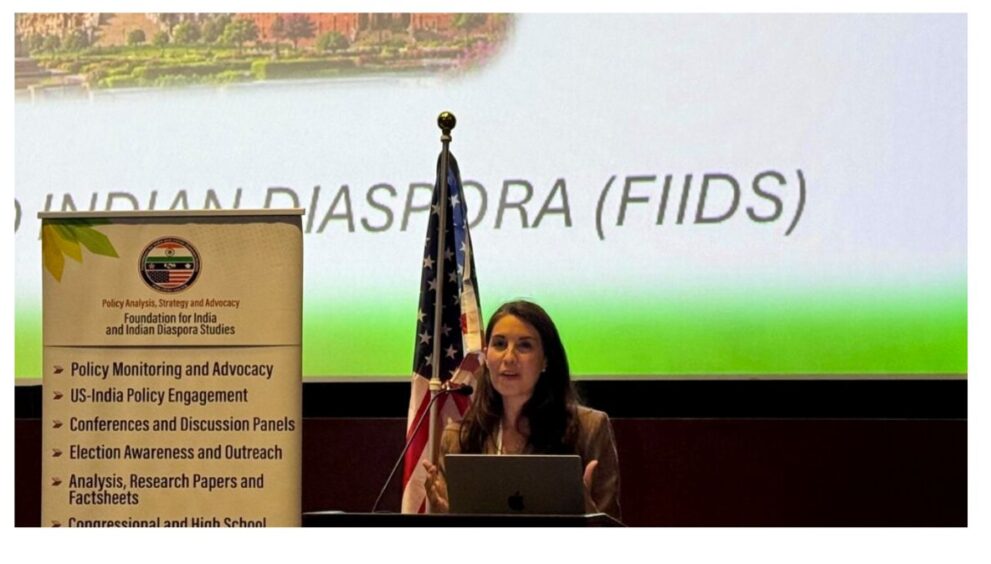
The growing strategic partnership between the United States and India received another powerful endorsement on Capitol Hill as senior government officials, lawmakers, diplomats and members of the Indian American community gathered in Washington, D.C., for the fourth annual U.S.-India Partnership Summit organised by the Foundation for India and Indian Diaspora Studies (FIIDS).
Held at the Capitol Visitor Center in the U.S. Capitol, the summit brought together influential voices from both countries to discuss the expanding relationship across defence, technology, trade, energy, education and the Indo-Pacific. The event concluded FIIDS’ fourth annual Capitol Hill Day, during which more than 150 delegates representing 25 U.S. states met with over 100 Congressional offices, including nearly 20 Senate offices, advocating on issues ranging from Indo-Pacific security and immigration reform to critical technologies, trade, supply chains, counterterrorism and concerns surrounding anti-Hindu and anti-India rhetoric.
A Partnership Built for the Future
Delivering the keynote address, Deputy Assistant Secretary of State for South and Central Asian Affairs Bethany Morrison described the bilateral relationship as one of America’s most important strategic partnerships, emphasising that the collaboration between the two democracies will play a defining role in shaping the future global economy.
“The U.S.-India relationship is the future,” Morrison said, pointing to rapidly expanding cooperation in artificial intelligence, semiconductors, critical minerals, clean energy, defence and education.
She highlighted the growing economic relationship between the two countries, noting that bilateral goods trade has reached US$149 billion, while Indian companies have announced approximately US$20 billion in investments through the SelectUSA programme. Morrison also praised the contribution of more than 330,000 Indian students studying in the United States, who collectively contribute over US$14 billion annually to the American economy.
She added that the Trump Administration remains focused on achieving tangible outcomes and indicated that negotiations on a landmark bilateral trade agreement are progressing, with both countries working toward an ambitious target of US$500 billion in bilateral trade by 2030.
Diplomacy Rooted in Shared Values
India’s Deputy Chief of Mission, Ambassador Namgya Khampa, described the bilateral relationship as “one of the most seminal and defining partnerships of the 21st century.”
Acknowledging that differences occasionally arise between two large democracies, Khampa stressed that shared values and long-term strategic interests continue to strengthen cooperation.
“There is a lot that brings us together and that makes us stronger together,” she said, while recognising the Indian American community as a vital force in sustaining bilateral ties.
Referring to FIIDS delegates as “very strong advocates” of the partnership, she remarked that “people are the ultimate custodians of this partnership.”
Indian Americans Strengthen Their Voice
FIIDS President and Chief of Policy and Strategy Khanderao Kand described the summit as the culmination of an unprecedented day of civic engagement.
“The participation of more than 150 delegates from 25 states and meetings with over 100 Congressional offices demonstrate the growing civic engagement and influence of Indian Americans,” Kand said. He added that bipartisan support across Capitol Hill confirms that the U.S.-India relationship has evolved into one of the defining strategic partnerships of the century.
Bipartisan Support Across Congress
Lawmakers from both political parties used the summit to reaffirm strong congressional backing for closer U.S.-India cooperation.
Senator Roger Marshall praised Indian Americans as one of the country’s most successful immigrant communities, remarking, “Every single time someone questions whether legal immigration works, you’re the answer. You didn’t just come to America, you helped build it.” He called India an indispensable Indo-Pacific partner while advocating expanded trade, greater market access and improvements to legal immigration.
Congressman Rob Wittman highlighted growing collaboration in defence, resilient supply chains and emerging technologies, describing them as essential pillars for maintaining stability across the Indo-Pacific.
Congressman Sanford Bishop reflected on Mahatma Gandhi’s influence on America’s Civil Rights Movement and urged continued availability of H visas and student visas for Indian professionals. He also emphasised cooperation on counterterrorism, supply chains and addressing anti-Hindu prejudice.
Congressman James Walkinshaw said the partnership continues to grow because it is founded on shared democratic values and common strategic interests, particularly in maintaining a free and open Indo-Pacific while strengthening supply chains and artificial intelligence collaboration.
Longtime India Caucus member Congressman Brad Sherman noted the remarkable expansion of bilateral trade during his three decades in Congress and reiterated his support for reducing visa backlogs affecting Indian professionals.
Congressman Bill Huizenga, Chairman of the House Foreign Affairs Subcommittee on South and Central Asia, expressed optimism about ongoing trade negotiations, suggesting they were “at the one-yard line.”
Several lawmakers also addressed immigration reform and the growing concerns surrounding anti-Indian and anti-Hindu discrimination.
Congressman Raja Krishnamoorthi strongly condemned rising prejudice, stating, “There is the rise of anti-Hindu, anti-Indian, anti-Desi hate. I’m not going anywhere. Neither are you.” Encouraging greater civic participation, he reminded attendees, “If you don’t have a seat at the table, you’re on the menu.”
Congressman Suhas Subramanyam advocated addressing immigration backlogs that affect highly skilled Indian families, while Congressman Shri Thanedar called for unity against anti-immigrant sentiment. Congressman Rob Bresnahan highlighted the contributions Indian Americans continue to make through entrepreneurship, healthcare, education and public service.
Congresswoman Judy Chu and Congressman Ro Khanna also joined the programme briefly to reaffirm their support for the Indian American community and continued cooperation between the two nations.
Looking Ahead
Additional speakers included Kapil Sharma of the Roundglass Foundation, who encouraged Indian Americans to convert their professional success into greater civic influence, and Bob Peckar of the American Jewish Committee, who stressed collaboration in combating religious discrimination.
As discussions concluded, participants shared a common view that the U.S.-India partnership has moved well beyond traditional diplomacy. Increasing cooperation in technology, trade, defence, energy, education and innovation—combined with the growing influence of the Indian diaspora—is positioning the relationship as one of the most consequential geopolitical partnerships of the modern era, with significant implications for global economic growth, democratic resilience and security across the Indo-Pacific.