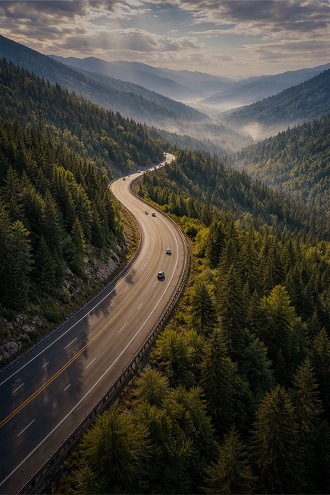
The evolution of infrastructure in North India has long been a catalyst for real estate transformation, but few developments are as poised to reshape market dynamics as the Delhi–Dehradun Expressway. More than just a connectivity upgrade, the expressway is redefining how homebuyers and investors perceive Dehradun—transitioning it from a scenic getaway into a compelling residential extension of the National Capital Region (NCR).
With travel time expected to shrink dramatically from six to seven hours to approximately two and a half, the psychological distance between Delhi and Dehradun is rapidly collapsing. This shift is not merely logistical; it is deeply behavioural. What was once considered a weekend retreat is now emerging as a viable location for regular living, remote working, and long-term investment. As accessibility improves, so too does the frequency and purpose of occupancy, fundamentally altering the region’s housing demand patterns.
This transformation is already visible in market data. According to a recent report by Magicbricks, housing demand across hill destinations grew by 8.2% year-on-year during the July–September 2025 period. Within this segment, Dehradun stood out with a notable 30.9% increase in property prices, signalling a surge in interest—particularly in premium, lifestyle-driven developments.
However, as with any emerging corridor, the opportunity is far from uniform. Value creation is increasingly concentrated in projects that are strategically positioned where location, design philosophy, and product differentiation converge to meet the expectations of a more discerning buyer. This is especially true as today’s consumers are not simply purchasing second homes; they are investing in environments that can seamlessly extend their primary lifestyle.
Developments like Excentia Tatva illustrate how this new demand is being interpreted and delivered. Situated along Rajpur Road one of Dehradun’s most established and premium residential corridors the project aligns with the evolving preference for exclusivity and low-density living. In contrast to high-density urban developments, it offers a more considered approach, where space, privacy, and long-term liveability take precedence.
What distinguishes such projects in the current landscape is their ability to translate infrastructure-led growth into meaningful residential value. As connectivity improves, buyers are increasingly evaluating homes not just as assets, but as fully functional living spaces capable of supporting extended stays. This shift has elevated the importance of design, environment, and community planning.
At Excentia Tatva, this philosophy is reflected in its integration with the natural and cultural fabric of the region. The development is anchored around a preserved 200-year-old tree courtyard, creating a unique spatial identity that blends heritage with modernity. Its proximity to spiritual landmarks such as Maa Anandmayee Ashram and Shri Aurobindo Ashram further enhances its appeal, offering residents a deeper connection to the locale beyond conventional urban living.
Sustainability and wellness are also emerging as critical considerations in buyer decision-making, particularly in destinations known for cleaner air and lower population density. As one of the early IGBC pre-certified gold-rated residential developments in Dehradun, Excentia Tatva incorporates principles such as natural ventilation, optimal daylighting, and expansive green spaces elements that resonate strongly with a post-pandemic mindset focused on health and well-being.
Equally important is the growing expectation for integrated living ecosystems. Modern buyers are no longer satisfied with standalone apartments; they seek self-sustained environments that support a holistic lifestyle. In response, projects are increasingly incorporating a wide range of amenities from clubhouses and wellness facilities to social and recreational spaces. At Excentia Tatva, offerings such as rooftop terraces, an infinity pool, and a comprehensive clubhouse are designed to create a complete residential experience that supports both leisure and productivity.
Industry perspectives further reinforce this shift. Manit Sethi, Director at Excentia Tatva, highlights that the true opportunity along the Delhi–Dehradun corridor lies not just in improved access, but in how effectively projects are positioned to leverage that change. In a market still undergoing value discovery, developments that differentiate themselves through thoughtful design, optimal density, and prime location are better equipped to deliver sustained returns.
Adding to this, Aniket Sethi, Director at Excentia Tatva, points to a broader behavioural evolution among buyers—particularly NCR-based professionals and entrepreneurs. Increasingly, they are seeking alternatives to high-density urban environments, prioritising space, privacy, and a stronger connection to nature without compromising on quality or convenience. This has led to a redefinition of second homes, which are no longer occasional-use assets but integral extensions of everyday living.
As the Delhi–Dehradun Expressway nears completion, its real impact will unfold not just in reduced travel times, but in the transformation of regional real estate dynamics. While the broader market will undoubtedly benefit from enhanced connectivity, it is projects with strong fundamentals those that align with evolving lifestyle aspirations that are likely to lead the next phase of growth.
In this changing landscape, Dehradun stands at a pivotal moment. No longer just a destination, it is becoming a choice a place where infrastructure, lifestyle, and investment converge. And within this narrative, developments like Excentia Tatva exemplify how the future of real estate is being shaped not only by where people invest, but by how they choose to live.