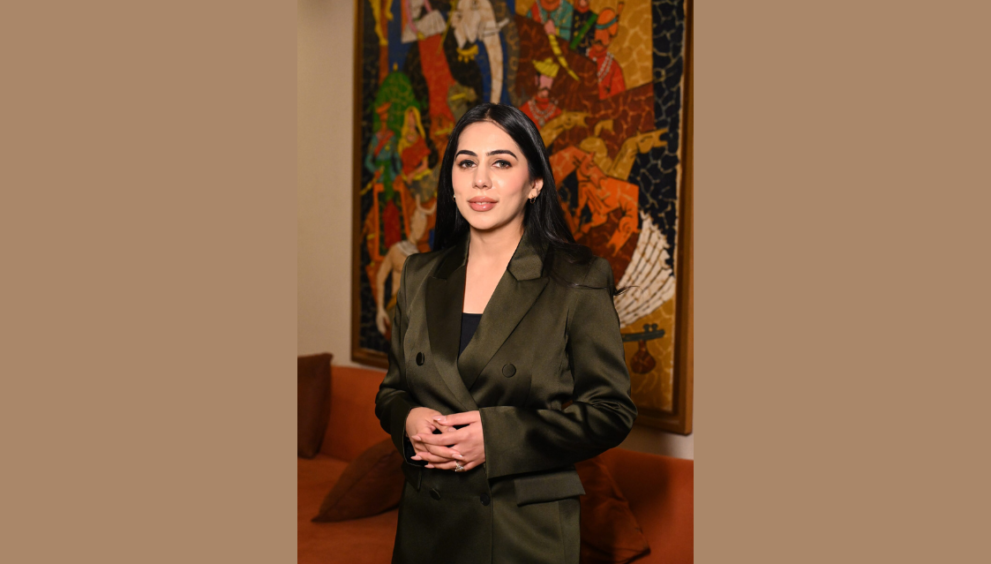
In an era where communication often feels fast, loud, and transactional, Brand Talk has carved a distinct identity by choosing intention over noise. Founded on the belief that meaningful storytelling begins with understanding people and culture, the agency has steadily grown into a respected name across hospitality, luxury, and lifestyle communications. In this conversation, the founder reflects on the inspiration behind Brand Talk, the philosophy of people-first storytelling, and the journey of building an agency rooted in authenticity, empathy, and thoughtful evolution.
Q. Brand Talk has grown quickly into a respected name in communications. What inspired you to start the agency, and what gap did you feel was missing in the industry?
A. Brand Talk began from a place of intuition more than ambition. I felt that communication had become loud and transactional, and somewhere along the way, meaning had taken a back seat. What I wanted to build was an agency rooted in intention, one that understood people, culture, and context before strategy. There was a clear gap for work that felt thoughtful rather than hurried.
Q. You often describe Brand Talk as a people-first and culture-led agency. What does that look like in practice?
A. For me, people-first means listening deeply to clients, to teams, and to the cultural moment we’re operating in. It shows up in small, everyday decisions: how we collaborate, how we respect boundaries, and how we stay emotionally aware even in fast-paced environments. When people feel valued, the work carries a different energy.
Q. Storytelling is central to your work. How do you know when a brand story feels authentic rather than forced?
A. Authentic stories don’t try too hard. They come from truth and restraint. I often ask whether a story still feels honest if you strip away the buzzwords. If it feels calm, clear, and aligned with the brand’s core values, that’s usually a good sign it’s real.
Q. Hospitality and luxury brands are a strong part of your portfolio. What draws you personally to this space?
A. Luxury and hospitality are deeply emotional spaces; they’re about how people feel, not just what they consume. I’m drawn to environments where detail, experience, and subtlety matter. There’s something very human about creating moments that people remember quietly, long after they’ve passed.
Q. You’ve worked with legacy brands like Shangri-La, Marriott, and The Leela Palace. How do you approach communication for brands with such deep histories?
A. With legacy brands, respect comes first. You don’t rush change, you listen. We focus on understanding what has remained constant over time and how to gently interpret that for a new generation. The goal is never reinvention, but thoughtful evolution.
Q. Fashion and lifestyle communication moves very quickly. How do you balance relevance with staying true to a brand’s identity?
A. I believe relevance should feel natural, not reactive. Trends come and go, but identity needs consistency. If something doesn’t feel intuitive to the brand, we don’t force it. Staying true often creates a deeper, more lasting connection than chasing what’s current.
Q. As a woman founder, what has been one of your most important learning moments on this journey?
A. Learning to trust my inner voice. In the early years, I felt the need to explain myself constantly. Over time, I’ve realised that calm confidence speaks louder than over-assertion. Leadership doesn’t have to be performative, it can be grounded and intuitive.
Q. You didn’t come from a traditional PR background. How has that shaped your perspective?
A. It allowed me to approach communication without rigid boundaries. I see PR, digital, experiences, and storytelling as interconnected rather than separate disciplines. That fluidity has helped me build strategies that feel more human and less formula-driven.
Q. Team culture seems to be very important to you. How do you nurture it during high-pressure moments?
A. I try to lead with empathy and clarity. High-pressure environments require emotional awareness as much as efficiency. When people understand the purpose behind the work and feel trusted, they show up with commitment rather than burnout.
Q. Awards like Business World 30 Under 30 and ET 40 Under 40 are significant milestones. How do you personally view these recognitions?
A. They’re humbling moments of pause. More than personal achievements, they feel like recognition of the journey, the risks taken, the lessons learned, and the people who’ve walked alongside me. They remind me to stay grounded and grateful.
Q. In a world filled with constant content and noise, what do you feel brands often misunderstand about communication?
A. Many confuse presence with impact. Being everywhere doesn’t necessarily mean being meaningful. Sometimes, intention, timing, and silence create more resonance than constant visibility.
Q. Finally, what kind of legacy do you hope to build through Brand Talk — for both clients and your team?
A. I hope Brand Talk is remembered for its integrity, for creating work that felt thoughtful, respectful, and true. For our clients, I want us to be trusted partners. For our people, I want this to feel like a space where they grew, felt supported, and stayed connected to who they are.