India’s economic story is inseparable from the rise of its Public Sector Undertakings (PSUs). At the apex of this PSU hierarchy stands a select group of giants known as Maharatna companies—a term that literally translates to “great jewel,” and in many ways, it is an accurate reflection of the role these enterprises play in shaping India’s industrial, financial, and energy landscape. These companies do not merely operate large businesses; they anchor critical national capabilities, employ lakhs, influence global markets, and act as stabilisers during economic turbulence.
The Maharatna classification is relatively new in India’s economic narrative. Introduced by the Government of India in 2009, the category was created to grant exceptional freedom and agility to the strongest PSUs—giving them the ability to invest up to 15% of their net worth in projects without prior government approval. This was a strategic step to ensure India’s largest state-owned firms could compete globally with state-backed giants from China, South Korea, and the Middle East.
Today, India has 13 Maharatna companies, each a powerhouse in its domain, cumulatively contributing trillions of rupees to national GDP.
A Short History of Maharatnas: How It All Began
India’s PSU evolution has its roots in the decades immediately following Independence. Companies like ONGC, BHEL, and SAIL were built to achieve self-reliance in core sectors. By the 1990s, liberalisation opened the economy, and PSUs found themselves competing with global multinationals.
To help them operate with greater flexibility, the Government introduced a three-tier categorisation:
- Navratna (first created in 1997)
- Mini Ratna
- Maharatna (added in 2009)
The idea was simple: the bigger and more profitable you are, the more autonomy you earn. Maharatna status became a badge of honour—reserved only for India’s biggest and most strategically significant enterprises.
Valuations: How Big Are Maharatna Companies Today?
Collectively, these companies command a combined market capitalisation exceeding ₹25 lakh crore. Several of them are among India’s most valuable listed companies.
- ONGC alone has a market cap of around ₹3.5–4 lakh crore.
- Coal India Limited, the world’s largest coal producer, maintains a valuation of over ₹2.5 lakh crore.
- NTPC, the backbone of India’s power generation, is valued at more than ₹3 lakh crore.
- Indian Oil Corporation, India’s largest refining company, stays within the ₹1.5–2 lakh crore bracket.
These valuations not only mark their financial strength but also their strategic relevance. India’s energy security, transportation infrastructure, power transmission, and heavy manufacturing rely heavily on the performance of these entities.
The Maharatna List (2025)
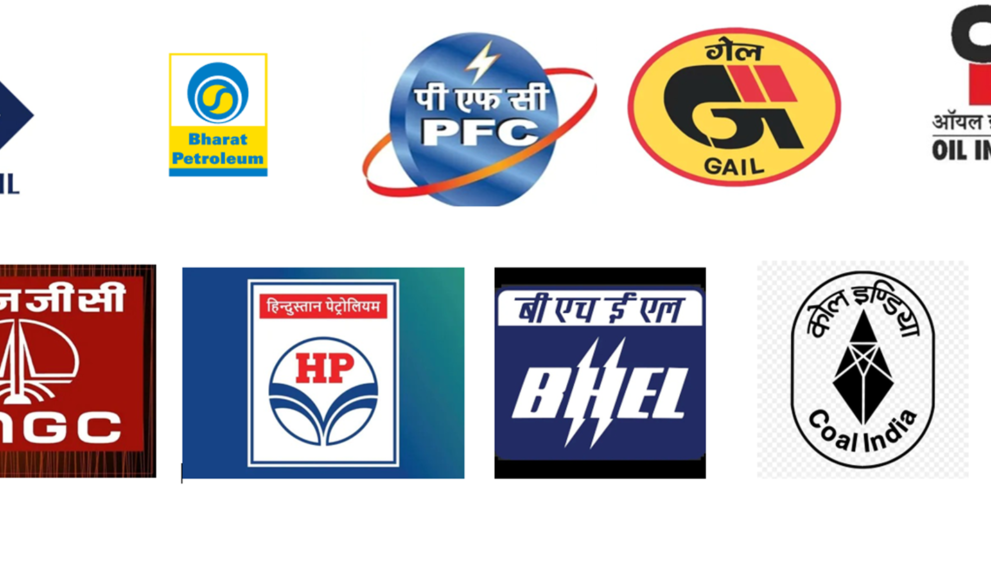
India currently has 13 Maharatna companies, spanning energy, engineering, power, petroleum, and natural resources:
- Bharat Heavy Electricals Limited (BHEL) – 1964
- Bharat Petroleum Corporation Limited (BPCL) – 1952
- GAIL (India) Limited – 1984
- Coal India Limited (CIL) – 1975
- Hindustan Petroleum Corporation Limited (HPCL) – 1974
- Steel Authority of India Limited (SAIL) – 1954
- National Thermal Power Corporation (NTPC) – 1975
- Rural Electrification Corporation (REC) – 1969
- Power Finance Corporation (PFC) – 1986
- Power Grid Corporation of India (POWERGRID) – 1989
- Indian Oil Corporation Limited (IOCL) – 1959
- Oil & Natural Gas Corporation (ONGC) – 1956
- Oil India Limited (OIL) – 1959
Inside the Giants: What Each Maharatna Does:
BHEL: The Engineering Backbone of India
BHEL is India’s largest power equipment manufacturer. Its turbines power every second home in the country. Interestingly, BHEL set up one of India’s earliest advanced research centres long before “R&D culture” became a corporate trend.
BPCL: Fuelling India since 1952
Known for brands like Speed and Bharat Gas, BPCL is one of the oldest petroleum refiners. It was originally a Burmah–Shell company before the government nationalised it in 1976.
GAIL: India’s Gas Superhighway
GAIL built India’s first cross-country gas pipeline— the Hazira–Vijaipur–Jagdishpur (HVJ) pipeline, which remains one of Asia’s biggest.
Coal India: The World’s Largest Coal Producer
CIL’s output is so massive that it alone supplies 80% of India’s coal. It runs the second-largest mining workforce in the world after China.
HPCL: The Refiner with Diverse Interests
HPCL not only refines petroleum but also produces ethanol, sugar, and power—an unusual mix for an energy company.
SAIL: The Steel Giant
SAIL’s Bhilai plant has produced the steel rails used by the Indian Railways for decades. Nearly every railway track in India has SAIL’s fingerprints.
NTPC: Powering the Nation
India’s largest power producer generates electricity through coal, gas, solar, wind, and hydro assets. NTPC is now aggressively transitioning to green hydrogen and floating solar.
REC & PFC: India’s Financial Powerhouses
These two Maharatnas are the principal lenders to India’s power infrastructure. Their loan books exceed ₹4–5 lakh crore each, making them among India’s largest NBFCs.
POWERGRID: The Silent Giant
Its transmission lines span more than 1.77 lakh ckm—enough to circle the Earth more than four times.
Indian Oil: India’s Largest Refiner
IOCL runs Asia’s biggest oil refining network and supplies aviation turbine fuel to almost every major airport in India.
ONGC: India’s Energy Lifeline
Accounting for over 70% of India’s crude oil production, ONGC is the backbone of India’s energy ecosystem.
Oil India: The Oldest Oil Producer in India
Founded in 1889 in Assam (yes, in the 19th century), it started operations decades before ONGC existed. Its crude pipeline from Assam to Bihar is a technological marvel.
Leadership Behind These Titans
Maharatna companies are known for leaders who begin their careers as trainees and rise through the ranks. Some notable leadership facts:
- ONGC and IOCL often have chairpersons with deep technical backgrounds—geophysicists, refinery engineers, or drilling experts.
- NTPC’s leadership pipeline is considered one of the best in India’s public sector, admired for its training academies in Noida and Vindhyachal.
- Coal India’s CMD typically oversees the world’s second-largest mining workforce—an HR challenge of enormous proportions.
- POWERGRID’s engineering teams have won global awards for grid resilience and smart grid innovation.
What Makes a Company Eligible for Maharatna Status?
A company must meet strict benchmarks:
- Must already be a Navratna
- Listed on Indian stock exchanges
- Minimum ₹25,000 crore average turnover in the last three years
- Minimum ₹15,000 crore average net worth
- Minimum ₹5,000 crore average profit after tax
- Significant global presence
Only a handful ever meet these thresholds.
Why Maharatna Companies Matter
These companies:
- Bring foreign exchange through exports
- Build critical infrastructure
- Support millions of jobs
- Drive national programs like electrification, exploration, and industrial expansion
- Act as stabilisers during recessions
- Play a pivotal role in India’s economic diplomacy
Without NTPC, POWERGRID, ONGC, IOCL, or SAIL, India’s developmental landscape would look very different.
Maharatna companies are more than just large PSUs—they are pillars of India’s strategic and economic ecosystem. With billion-dollar balance sheets, global operations, world-class engineering capabilities, and decades of institutional memory, these enterprises continue to power India’s growth story. As India moves toward becoming a $5 trillion economy, the performance, agility, and innovation of these Maharatna companies will remain one of the nation’s strongest competitive advantages.