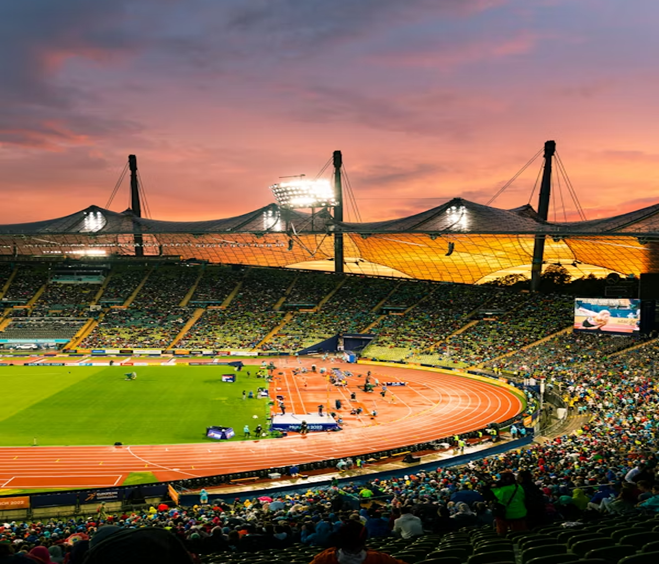
Ahmedabad in Gujarat will host the 2030 Commonwealth Games, also known as the Centenary Games. The decision, ratified at the General Assembly of Commonwealth Sport in Glasgow on 26 November 2025, marks a historic milestone coming 20 years after India last hosted the event in 2010.
The victory has set off celebrations across the country, with the Prime Minister calling it a proud moment for India’s sporting ecosystem and its growing global sporting identity.
What the Win Means: Sporting Pride and Global Recognition
Hosting the centenary edition of the Commonwealth Games strengthens India’s position on the global sports map. Ahmedabad was selected based on its “world-class stadiums, training facilities and sporting culture”, and now stands to gain significantly from international visibility.
The event also aligns with India’s long-term ambition to host bigger global sporting events, including potential future Olympic bids, using the Commonwealth Games as a proving ground for infrastructure and organisational capability.
Economic Benefits & Sector-Wide Opportunities
Infrastructure & Urban Development
The Games will require major upgrades across stadiums, athlete villages, transportation systems, hospitality facilities, and urban amenities. This is expected to trigger significant construction, engineering, and services activity, creating jobs and accelerating urban renewal—particularly in Gujarat.
Sports, Tourism & Hospitality Boost
Tourism, hospitality, transport, and allied sectors will receive a major boost with athletes, officials, and visitors arriving from across the Commonwealth. The event is expected to promote domestic tourism, cultural tourism, and international exposure for India’s heritage and modern urban development.
Sports Ecosystem & Talent Development
India’s sports ecosystem will see substantial advancement. Improved arenas, training centres, and international-standard facilities will elevate athlete preparation and encourage greater grassroots participation.
Ancillary Industries: Media, Technology & Services
Demand will rise for event management, broadcasting, communication, security, digital infrastructure, and logistics. Companies in these sectors are likely to benefit, enhancing India’s capability to host future large-scale international events.
Long-term Economic Impact & Brand India
A successfully executed Commonwealth Games will strengthen India’s brand as an investment- and tourism-friendly destination. Improved infrastructure, heightened global attention, and soft-power gains could attract more FDI, international conferences, and long-term tourism.
Social & Strategic Gains
The CWG 2030 is expected to inspire youth participation in sports, promote healthier lifestyles, and strengthen the country’s sporting culture. The Games can become a symbol of national unity and pride, showcasing India’s diversity and hospitality under the ethos of “Vasudhaiva Kutumbakam.”
For Ahmedabad and Gujarat, the event provides an opportunity to emerge as a world-class sports and events hub, supported by legacy infrastructure that will serve future athletes and global competitions.
Challenges & Risks India Must Manage
Cost Overruns & Budget Discipline
Mega-events usually face budget overruns. Without careful planning and transparent oversight, India risks over-investing or creating underutilised “white elephant” facilities.
Infrastructure & Project Delivery Risks
Timely completion of stadiums, athlete accommodations, transport networks, and urban amenities is critical. Delays could harm India’s reputation and result in financial losses.
Post-Event Utilisation & Sustainability
Ensuring long-term use of stadiums, athlete villages, and related infrastructure will be essential. Underuse or neglect post-2030 could undermine the Games’ legacy benefits.
Coordination & Governance Challenges
Successful execution will require seamless coordination across the central government, Gujarat state authorities, local bodies, and sectors such as construction, hospitality, security, and transport. Strong governance and accountability will be vital.
Social & Environmental Concerns
Large events can strain local resources and create environmental challenges. Urban congestion, waste management, and ecological impact must be mitigated through robust sustainability planning.
Strategic Perspective
Hosting the 2030 Commonwealth Games is not an end in itself but a strategic stepping-stone toward India’s broader ambition of hosting global-level events, including the Olympics. The infrastructure, operational experience, and credibility gained could support future bids.
Executed well, the Games can leave a lasting legacy—strengthening sports culture, accelerating urban development, enhancing India’s global reputation, and stimulating the economy.
Conclusion
India’s victory in securing the 2030 Commonwealth Games is a milestone in the nation’s journey of sporting development and global aspirations. The opportunities across infrastructure, tourism, sports development, and national branding are immense. However, realising them will require meticulous planning, budget discipline, sustainable construction, and robust governance.
If these challenges are managed effectively, CWG 2030 could become more than a sporting event—it could be a defining chapter in India’s rise as a global sports, economic, and cultural powerhouse.