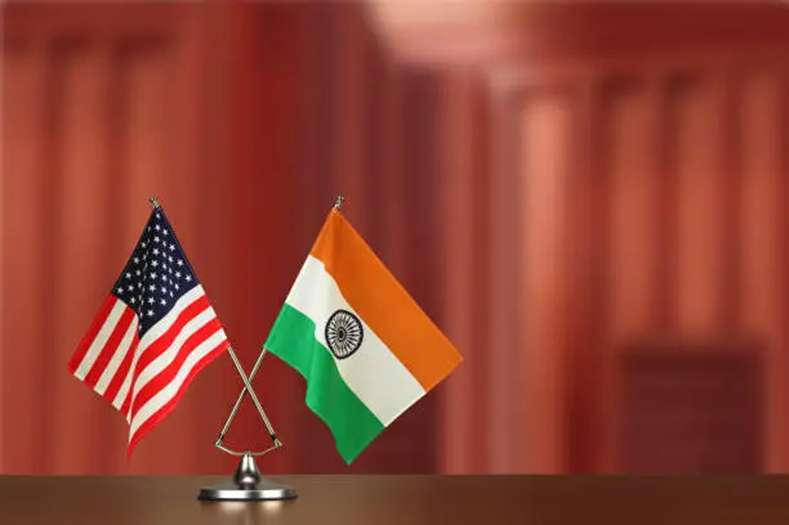
U.S. Ambassador-designate Sergio Gor on Sunday conducted a series of high-level negotiations in New Delhi to rebalance economic and strategic partnerships between India and the United States. His meeting with Commerce Secretary Rajesh Agarwal marks a critical juncture, with both countries relaunching stalled trade talks in the hopes of drawing up a new agreement following months of tension.
Diplomatic Overtures at the Top
Gor and Agarwal touched on opportunities for greater bilateral trade, raising investment flows, and broader cooperation in key economic areas. Increased U.S. investment interests in India were noted by the U.S. Embassy as being discussed during negotiations.
Earlier in the day, Sergio Gor met with Prime Minister Narendra Modi, describing it as an “honour” and hoping that his term of office will enhance the India-US Comprehensive Global Strategic Partnership. Modi expressed optimism, indicating that he is “pleased to welcome Sergio Gor” and anticipates increased bilateral coordination ahead.
Aside from trade, Sergio Gor met with External Affairs Minister S. Jaishankar and National Security Advisor Ajit Doval. With Jaishankar, there was a wide-ranging conversation on bilateral issues, and with Doval, regional security and a shared vision of a “free and open Indo-Pacific”. Both meetings were called productive steps toward closer strategic cooperation by the U.S. Embassy.
Trade Negotiations Get a Second Wind
The talks come on the heels of renewed momentum in India–U.S. trade talks. Previous efforts were stalled following Washington imposing 50% tariffs on much of India’s imports and levying extra duties related to India’s energy purchases from Russia. New Delhi attacked the actions as “unfair” and pushed to have them rolled back.
Nevertheless, revived phone conversations between PM Modi and President Trump have created guarded optimism, and people close to the negotiations indicate that negotiators are working on models for reductions in tariffs, relaxation of market access, and increased bilateral investment. The selection of Gor — a close Trump associate — as ambassador indicates that Washington wants to inject more direct leverage into negotiations.
Analysts view the gesture as high-stakes, in which trade isn’t merely about commerce but also about signalling intent and restoring trust following a period of increasingly vexing policy tensions.
Who Is Sergio Gor?
Background: Born in 1986 (reported in Tashkent, Uzbekistan), Sergio Gor immigrated to the U.S., studied at George Washington University, and subsequently modified his surname from “Gorokhovsky” to Gor.
Political position: He is now Director of the White House Presidential Personnel Office and is one of President Trump’s most senior staff.
Controversies: Gor has had high-profile clashes with Elon Musk, who previously called him a “snake.” Gor’s style of working and background screening have been questioned in media and political circles.
Ambassador position: Trump named him U.S. Ambassador to India and a Special Envoy for South and Central Asia. Sergio Gor continues in his White House position pending Senate confirmation. With his political clout and proximity to Trump, Gor’s appointment is seen as more than ceremonial — it could provide Washington greater direct leverage on trade and strategic discussions with India.
Expert Views
A Council on Foreign Relations piece argues that the U.S. views the India trade relationship as imbalanced and that now may be the moment for India to accept incremental steps rather than hold out for full concessions.
The Stimson Center, in an analysis of recent U.S. trade policy, notes that recent tariff escalations risk depleting mutual trust, even as deeper cooperation in technology and defence remains attractive to both sides.
Trade commentators point out that agricultural market access remains a sticking point: India has guarded its farming sector closely, and U.S. demands in that area have historically derailed negotiations.
These perspectives underscore that even as diplomacy opens new doors, structural conciliation — including on tariffs, agriculture, and reciprocity — remains a steep climb.
FAQs
Q: Why is Sergio Gor’s nomination important to the trade talks?
Because Gor has direct access to the Trump administration and is seen as a political gatekeeper, his presence may accelerate decision-making in trade and economic matters.
Q: Are the 50% tariffs on Indian goods still in force?
Yes — they were levied by Washington and remain a major point of contention that India demands be reversed as part of any trade understanding.
Q: Will India concede its farm protections?
Most analysts believe India will resist sweeping concessions on agriculture, treating it as a “red line” given the sector’s socio-political sensitivity.
Q: How fast can a trade deal progress now?
While timelines are speculative, the pace may accelerate only if political will at the highest levels in both countries aligns. The next rounds of negotiations will be critical.
Conclusion
Sergio Gor’s trip to New Delhi is a strategic reset in India–U.S. economic diplomacy. By sitting down with senior Indian leaders, Gor indicates Washington’s willingness to tackle tension-inducing trade problems with seriousness and elbow grease.
But the road ahead is narrow: India demands equity, sovereignty, and some non-negotiables, particularly on agriculture and tariffs. Gor’s close proximity to Trump confers leverage, but navigating the sensitivities of India — particularly on energy policy and import restrictions — will challenge his diplomacy.
If the political will of both sides prevails, this window could result in the first meaningful trade agreement between two of the world’s greatest democracies in years. The next few weeks will tell whether words translate into genuine concessions.