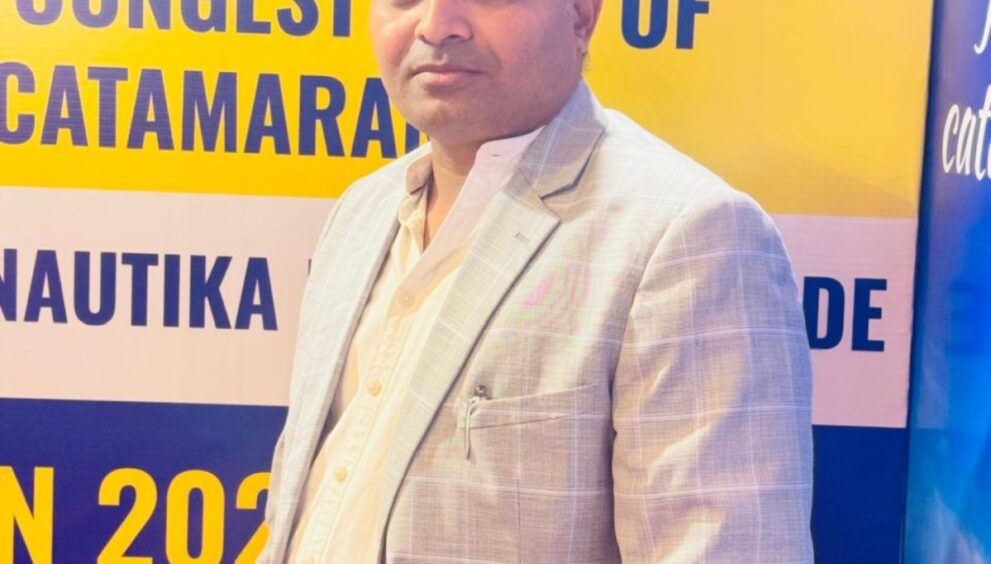
The government investment in port connectivity, digitalization and coastal infrastructure has also encouraged increasing engagement by private operators, says Anoop Kumar, Partner and Director, Nautika in an interview
How has the passenger ferry market in India evolved over the past few years, and where does Nautika see itself within this landscape?
India’s passenger ferry sector has transformed dramatically over the last decade, from a simple form of travel to a key component of regional tourist and mobility infrastructure. The expansion of domestic tourism, especially in coastal and island regions, has increased the need for quicker and more comfortable services of water transport. Government investment in port connectivity, digitalization and coastal infrastructure has also encouraged increasing engagement by private operators. Today’s passengers demand more organised, time-efficient and digitally accessible services – with online booking systems, scheduled boarding and enhanced onboard facilities.
In this shifting scenario, Nautika has arisen as one of the new breed of private ferry operators catering to the high-speed inter-island connection, especially in the Andaman Islands. The company is not presenting itself just as a low-cost transport provider, but seems to be competing in a sector where reliability, trip time and passenger experience become even more crucial. This is a sign of a wider trend in the ferry sector as operators respond to evolving visitor expectations and growing demand tied to tourism.
What have been some key milestones for Nautika since its inception, particularly in terms of routes, fleet expansion, or passenger volumes?
Established in the Andaman region, Nautika has been primarily recognized for inter-island ferry operations connecting key sites such as Port Blair, Havelock and Neil Island since its start. Among the company’s early accomplishments was the introduction of high-speed catamaran ferries, which reduced inter-island travel time and increased passenger capacity. This was truer in a tourism-dependent location, where faster connection was directly proportionate to passenger convenience and itinerary planning.
Through the years the company has fine-tuned its fleet profile and has launched upgraded service formats, including vessels such as the Nautika Pro, which offer different categories of seats and better onboard facilities. Another important milestone has been the reported movement of approximately 2.5 million people in a very short time of operations, which is a reflection not just of increased tourism activity in the Andamans but also of growing acceptability of private ferry operators in the region. Nautika has also made operational and digital changes, including QR boarding technologies to ease passenger flow and reduce delays at terminals.
What are the primary operational challenges in running a ferry service in India, especially in terms of infrastructure, regulation, and seasonal demand?
There are a number of structural and operational challenges in operating passenger ferry services in India. One of the major problems continues to be infrastructure constraints. Many coastal and island locations still lack sophisticated passenger handling systems, enough docking space or weather-resilient infrastructure at ports and jetties. In places where lots of tourists go, if there are too many people at the terminals in busy times of the year, it can make it take longer to get going again and less efficient to plan when things will happen.
Weather dependency is another big challenge. Monsoons, strong seas and poor visibility have a direct impact on the operations of ferries, particularly in island areas such as Andamans. Disruptions of such nature could cause delays, cancellations and change in passenger traffic. There are also a number of regulations from the marine authorities, local administrations and tourism agencies that operators have to comply with and that adds to the operating complexity.
And then there is the seasonality that impacts business viability. Passenger loads might fluctuate dramatically between peak tourist months and off season times making it more difficult to plan for fleet usage & profitability. The pressure is mounting, especially for operators of high speed vessels with rising fuel prices as fuel use represents a significant part of operational costs.
How does Nautika approach safety standards and passenger experience, and how have these evolved over time?
As travellers start to look at operators beyond ticket prices, safety and the passenger experience are becoming more critical differentiators in the ferry sector. Nautika seems to be focused on vessel stability, orderly boarding procedures and operational uniformity. Modern catamaran vessels are designed to provide improved ride comfort, faster journey times and better stability in sea conditions than older generation ferries.
And passenger expectations have developed a lot over the years too. Travellers today expect the ferry industry to give similar experiences to organised air or train travel such as air-conditioned seating, computerized ticketing, on-board support and smoother check-in procedures. In order to meet these expectations operators like Nautika have used techniques like QR-based boarding systems to reduce congestion and improve efficiency at airports.
At industry level, safety standards are increasingly linked to vessel maintenance and regulatory compliance, as well as communication systems, crowd control, emergency planning and weather monitoring. As ferry travel becomes more and more geared towards tourism, passenger confidence in operational safety and reliability is becoming essential for long-term success.
Have there been any recent or upcoming service launches, route expansions, or technological upgrades within Nautika’s operations?
In recent improvements in its operations Nautika has not been focused on quick geographical expansion, but rather on enhancing efficiency and management of passengers. One of the major enhancements includes the introduction of QR-based rapid boarding technology to cut down on manual verification and reduce check-in times at terminals. Such technologies are becoming increasingly relevant for high footfall tourist sites where passenger movement needs to be managed more efficiently during the busy seasons.
The corporation has also increased its fleet capabilities with vessels like Nautika Pro, which features upgraded seating forms and enhanced on-board facilities. Although inter-island routes in the Andamans constitute Nautika’s principal operating network, these changes indicate an emphasis on service enhancement and operational scalability.
More broadly, Indian ferry operators are investing more and more in digitisation, automated booking systems and customer communication tools, to improve reliability and minimize operational friction. In the sector, technology adoption is increasingly becoming a competitive necessity, rather than an added feature.
How is customer behaviour changing when it comes to choosing ferry travel over other modes of transport?
The behaviour of the customers in the ferry travel has evolved significantly notably with the advent of the experiential and destination tourism. Ferry travel is considered more as part of the whole tourism experience rather than just as a practical transfer between two sites. Thus, comfort, punctuality, cleanliness, digital access and the environment onboard have become more important considerations in travel decisions.
In areas like the Andaman Islands, ferries remain a major mode of transportation, being the sole direct connection between islands where air travel is not an option. But now travellers tend to check around for operators before they buy, considering flight timings, seat categories, internet ratings, convenience of boarding, and cancellation policies. Younger travellers, in particular, seek seamless digital experiences, including mobile bookings, internet purchases and real-time communication.
There is also a growing need for organized and predictable travel experiences. Ferry operators are being asked to give their customers an airline-like or premium rail service experience and precise schedules and effective customer care are important.
What role does sustainability play in Nautika’s long-term strategy, particularly in terms of fuel use and environmental impact?
Sustainability is an increasingly relevant topic of discussion in the maritime and ferry industry, particularly in environmentally sensitive areas such as the Andaman Islands. Ferry operators today face more pressure than ever to reconcile expansion in tourism with environmental responsibility, especially as coastal ecosystems are under increasing stress from expanding visitor quantities and marine activity.
Today’s catamaran vessels are generally intended to be more hydrodynamically efficient, to cut journey time and to optimise fuel use over older ferry models. This does not remove environmental impact, but can help to reduce emissions per passenger over time. Interest from industry in cleaner fuel technologies, energy efficient vessel design and reduced port-side emissions is developing, while widespread adoption in India is still very early days.
There are also increasing discussions on sustainability including waste management, education of passengers and responsible tourism practices to mention a few. Ferry operators will definitely come under even more pressure from authorities and travelers on their environmental performance and operational sustainability in the future.
Looking ahead, what are Nautika’s priorities for growth and expansion over the next 3–5 years?
In the next few years, Nautika is planned to focus on improving operational consistency, modernizing passenger management systems and boosting capacity to fulfill tourism demand. Operators will need to look at extending their fleets as inter-island tourism increases, especially to places such as the Andamans, but also to maintain reliability when passenger numbers are at their highest and seasonal interruptions occur.
Digital integration will likely continue a primary priority area, including advancements in booking systems, passenger communication, and terminal operations. With consumer expectations changing, fleet modernisation and service efficiency will become increasingly critical.
At an industry level, future growth potential for private ferry operators in India would be highly dependent on infrastructure development including improved jetty facilities, modernized ports and better coordination between tourism and marine authorities. There’s still a lot of ground to cover relative to other modes of transport so there’s a lot of runway for growth, but how we grow over the long term will be about balancing the ability to scale operations with safety, the environment and infrastructure readiness.